
The Search and Rescue Robots Market is evolving rapidly through the integration of aerial drones and ground-based robotic platforms. Modern emergency response strategies increasingly rely on coordinated robotic ecosystems rather than standalone units. By combining the aerial perspective of drones with the physical manipulation capabilities of ground robots, rescue teams can achieve faster, safer, and more efficient mission outcomes.
Recent advancements in Multi-robot coordination technologies highlight how synchronized systems enhance operational coverage during disasters. Aerial drones are typically deployed first to conduct high-altitude reconnaissance, capture real-time imagery, and map disaster zones. Using thermal imaging and advanced visual analytics, drones can quickly identify heat signatures or movement patterns that may indicate trapped survivors.
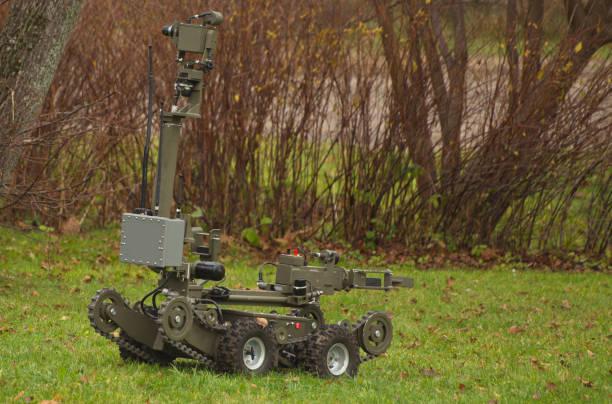
Once potential victims are located, ground robots are deployed to navigate debris, unstable terrain, or flooded areas. These robots are equipped with robotic arms, tracked mobility systems, and communication modules that enable close-contact inspection and assistance. Integration between aerial and terrestrial systems ensures seamless data sharing through centralized command platforms, allowing rescue coordinators to make informed decisions in real time.
The collaborative approach also improves resource allocation. Drones can assess structural damage and environmental hazards before dispatching ground units, reducing unnecessary exposure and optimizing mission planning. In large-scale emergencies such as earthquakes or hurricanes, this integrated strategy significantly shortens response times.
Technological progress in wireless communication, edge computing, and battery efficiency has further strengthened drone-ground interoperability. Advanced mesh networks allow continuous connectivity even when traditional communication infrastructure is damaged. Additionally, AI-driven analytics enhance coordination by automating search pattern distribution among robotic units.
As governments and emergency agencies modernize disaster preparedness frameworks, integrated robotic systems are becoming standard operational tools. The Search and Rescue Robots Market is therefore expanding through innovations that emphasize collaboration, data-driven decision-making, and operational synergy between multiple robotic platforms.
FAQs
Q1: Why integrate drones with ground robots in rescue missions?
Drones provide aerial reconnaissance, while ground robots handle debris navigation and physical interaction, improving efficiency.
Q2: How do integrated systems improve disaster response?
They enhance coverage, enable real-time data sharing, and optimize resource deployment.

 English
 Arabic
 French
 Spanish
 Portuguese
 Deutsch
 Turkish
 Dutch
Dutch
 Italiano
 Russian
 Romaian
 Tiếng Việt